Three doughs, three textures
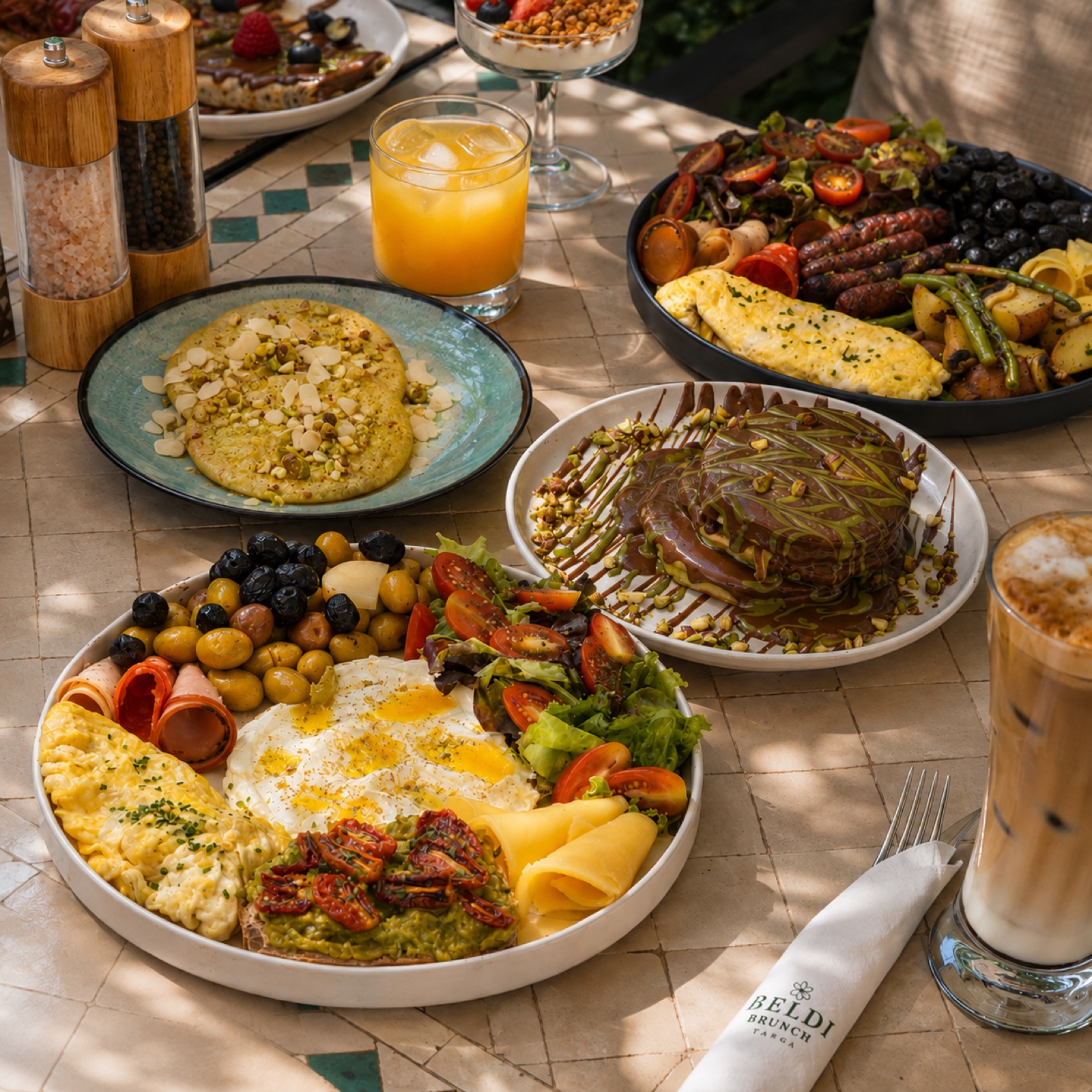
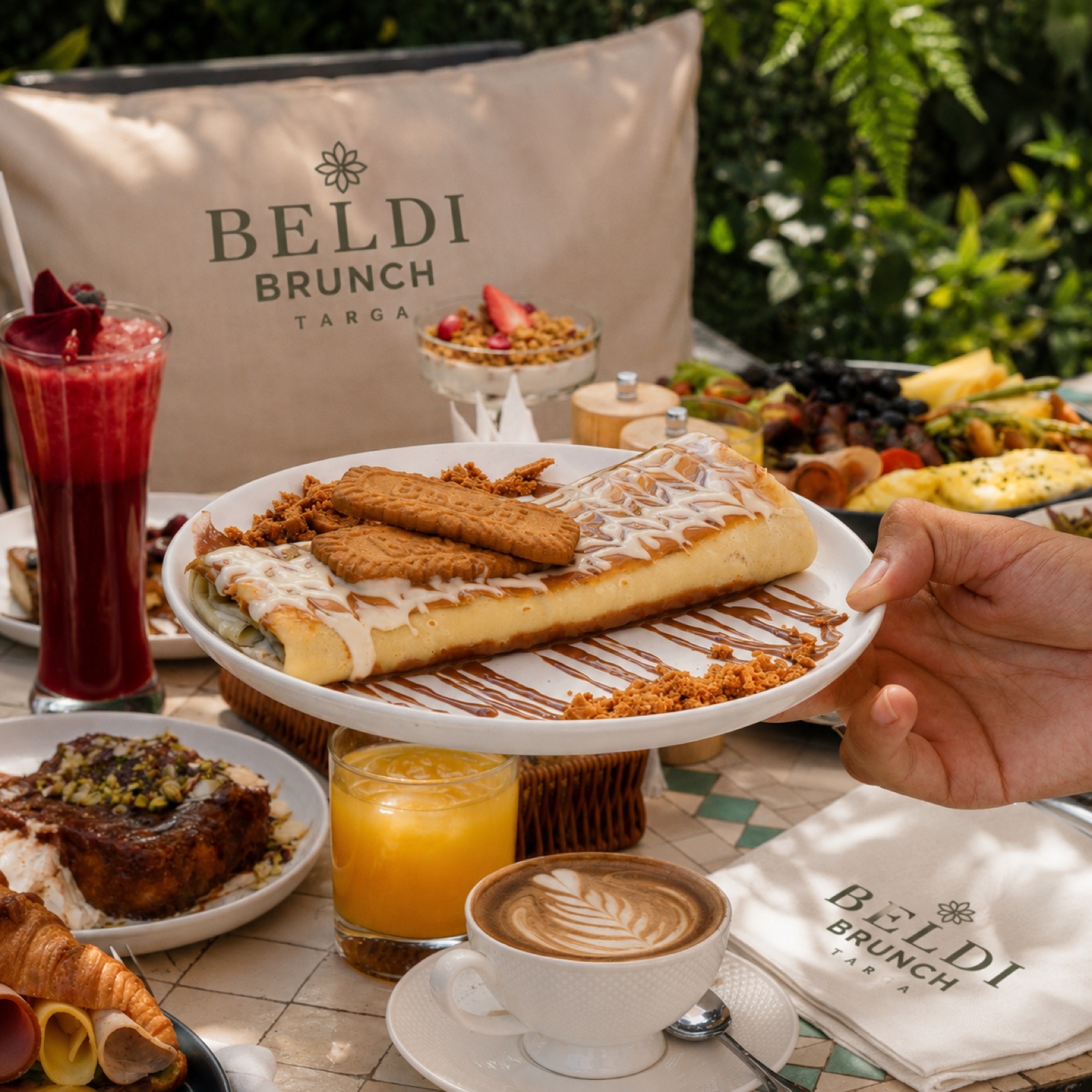
Msemen is a layered dough, folded into a square and cooked on a griddle: crisp outside, soft inside, eaten hot with melted butter and honey. Baghrir is the thousand-hole pancake, a semolina batter that rises and forms tiny holes where honey and amlou settle. Harcha is a denser semolina cake, golden with butter, split open and filled.
What comes with them
- Honey, poured at the table over the still-hot msemen.
- Amlou, a paste of roasted almonds, argan oil and honey from the south of Morocco.
- Olive oil, with a little cheese or salt for those who prefer savoury.
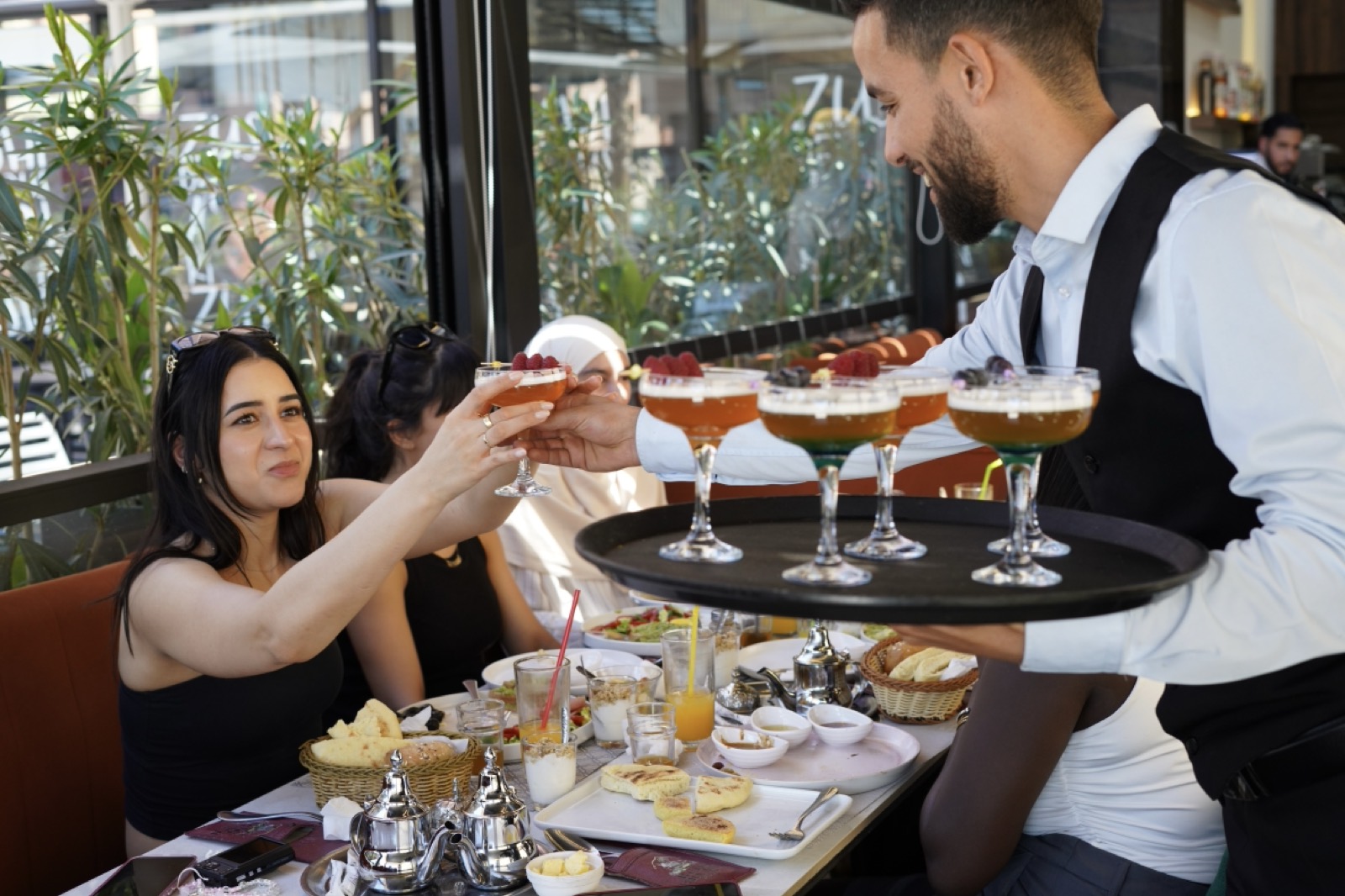
- Mint tea, in a glass or a silver teapot, to close the meal.
Eggs, the Moroccan way
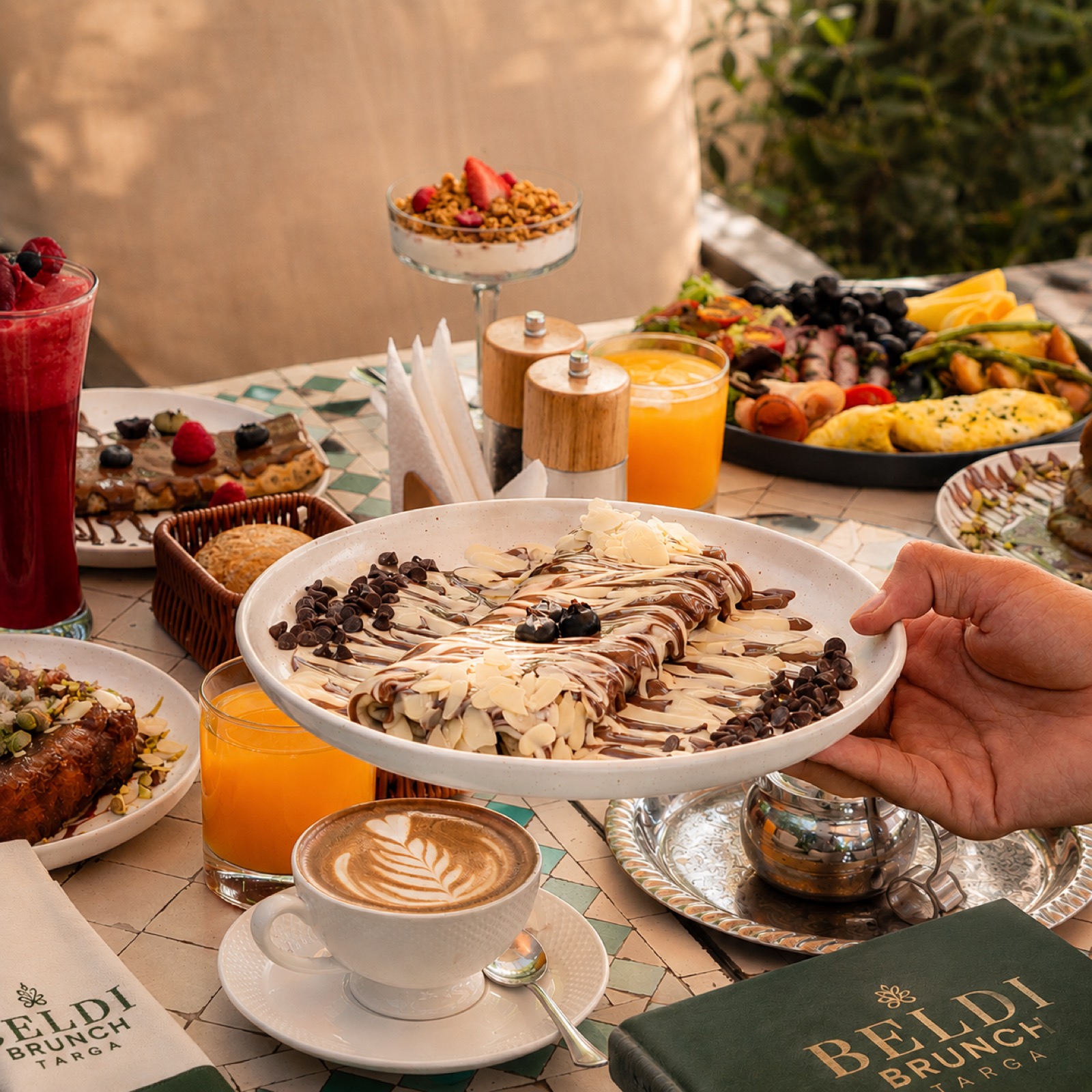
Eggs with khlii: dried, preserved beef warmed in its own fat, with the eggs cracked on top, served in a tajine. Berber eggs: cooked in a tomato and onion sauce with cumin, to mop up with warm bread. Both are on the menu from 7am.
How to eat it
With your hands, and in no particular order. Tear the msemen, dip the harcha in amlou, keep the baghrir for the honey. The ftour sits in the middle of the table: sharing is its most important rule.
The Ftour Beldi platter brings together msemen, baghrir, harcha, honey, amlou, olive oil and cheese. Each piece is also available on its own.